Erhu Music
Introduction
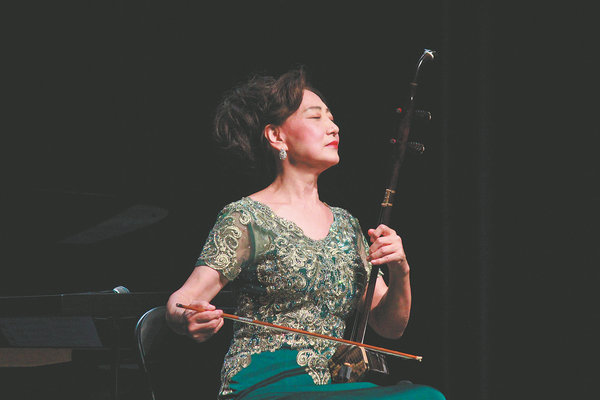
Erhu music refers to compositions and performances featuring the erhu, a traditional Chinese two-stringed bowed instrument. Known for its emotive and expressive sound, the erhu has become a significant symbol of Chinese music heritage. The instrument's design is simple yet effective, consisting of a long neck, a resonant sound box, and two strings. It is traditionally made with materials like wood and python skin, which contribute to its distinctive tonal quality. One of the most famous compositions for the erhu is Er Quan Ying Yue (The Moon Reflected on the Second Spring), composed by Hua Yanjun, also known as A Bing. This piece exemplifies the emotional depth and versatility of erhu music.
Erhu Music Techniques
Playing the erhu requires a high degree of skill and artistry. Despite its two-string design, the instrument is capable of producing a wide range of tones and expressions. Techniques such as vibrato, glissando, and portamento are commonly used to convey the emotional nuances characteristic of erhu music. The lack of a fingerboard allows for greater flexibility in pitch modulation, enabling performers to achieve an expressive vibrancy unique to the instrument. Mastering the erhu involves not only technical proficiency but also an understanding of its cultural and historical context.
Prominent Erhu Musicians
Erhu musicians like Jiang Jianhua, Hua Yanjun (A Bing), and Min Huifen have achieved international acclaim for their contributions to the art form. Jiang's dedication to the instrument is reflected in her extensive body of work, which includes collaborations with famous conductors and composers, as well as solo performances at major venues around the world. Hua Yanjun, better known as A Bing, is a legendary figure in erhu music, renowned for his composition Er Quan Ying Yue (The Moon Reflected in the Second Spring).Min Huifen was another influential erhu maestro, whose artistry and technique captivated audiences throughout her career.
Erhu Music in Film and Theater
The expressive quality of the erhu makes it well-suited for conveying emotion in film and theater. Its haunting melodies have been featured in various soundtracks, most notably inThe Last Emperor, where Jiang Jianhua's performance contributed to the film's critical acclaim. The erhu also plays a significant role in Chinese opera and dance dramas, where it often accompanies narratives rooted in traditional Chinese folklore and history. The ballet Moonlight over the Erquan Pond, inspired by A Bing's life and music, exemplifies the instrument's ability to enhance storytelling through its evocative sound.
Erhu Global Influence
The global influence of erhu music is evident in its incorporation into diverse musical genres and collaborations with international artists. Famous erhu musicians have played a pivotal role in this cross-cultural exchange, introducing the erhu to audiences unfamiliar with Chinese music. Performances at international festivals and collaborations with Western orchestras have broadened the instrument's appeal, demonstrating its adaptability and emotive power. Through these efforts, the erhu continues to resonate with audiences worldwide, fostering an appreciation for its unique sound and cultural heritage.








